The turntable is driven round manually using a normal model railway train controller. Power for the trains is carried to the bridge rails through the table ring rail and the table carrying wheels, the polarity is automatically switched to suit the approach track.
My table was originally wired for conventional block control and has since been altered for DCC so both versions are detailed below.
The turntable bridge is a drop in, lift out design requiring no fixing, consequently no direct wires to the bridge are possible. The power to the rails is collected from the support wheels at each end.
Before doing anything else connect the motor wires to a power pack and give it a whirl. I originally wired mine up for DC block control and have since modified it for DCC. The wiring I used is given in the following sections.
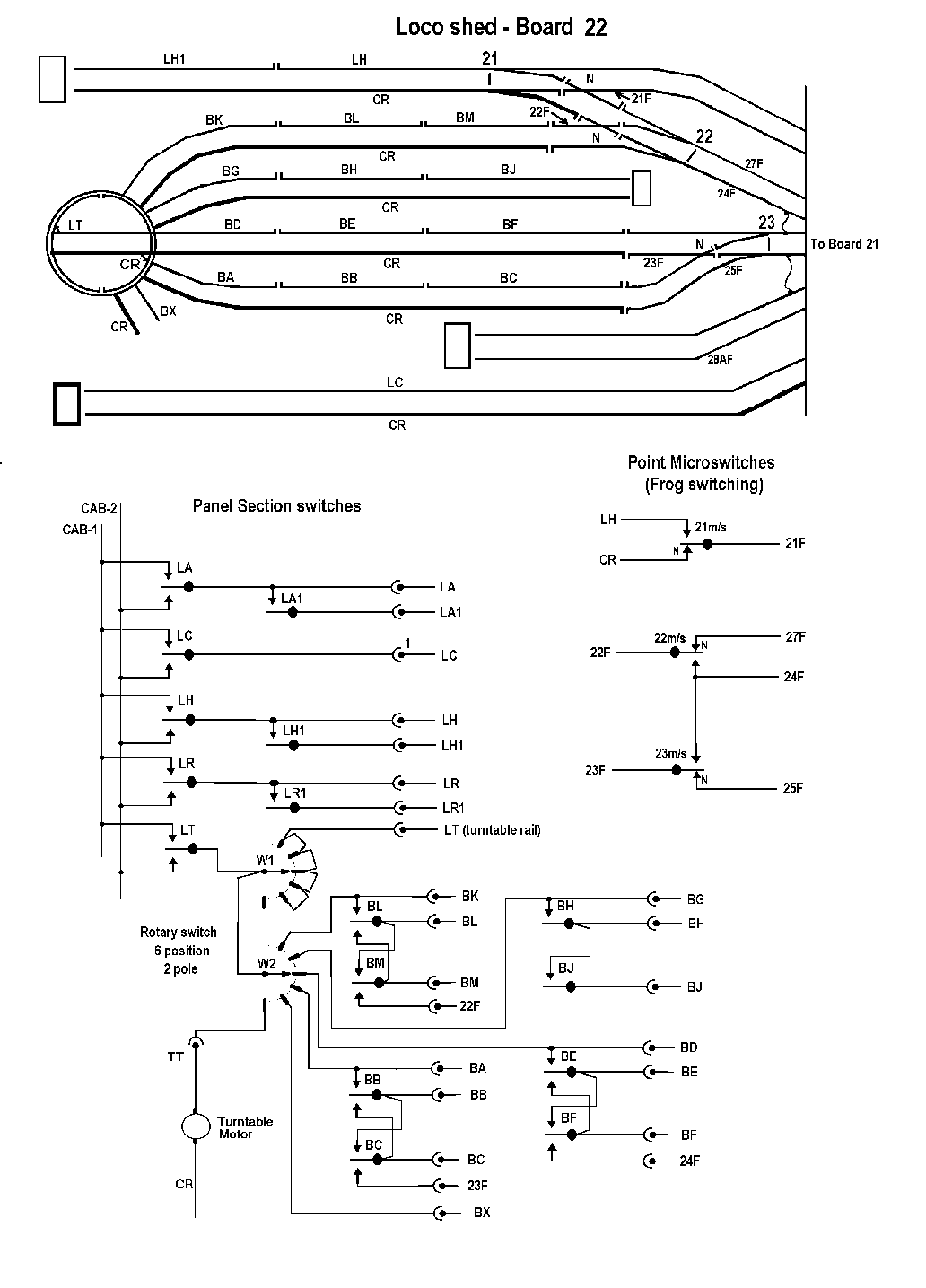
For DC control the locomotive yard has to be broken up into locomotive size sections individually powered so that any locomotive can be moved independently. I made the turntable into one of the cab sections for the yard and had subsections on the radiating roads. A 6 position selector switch for the table directed power to the table and any one of the 5 radiating roads, the 6th position isolated the tracks and connected the controller to the table motor. Operating procedure was thus to select position 6, drive the table to line up with the required road, select the corresponding switch position, turn on sufficient subsidiary sections to reach the required berth, then move the loco. The wiring for this is shown here.
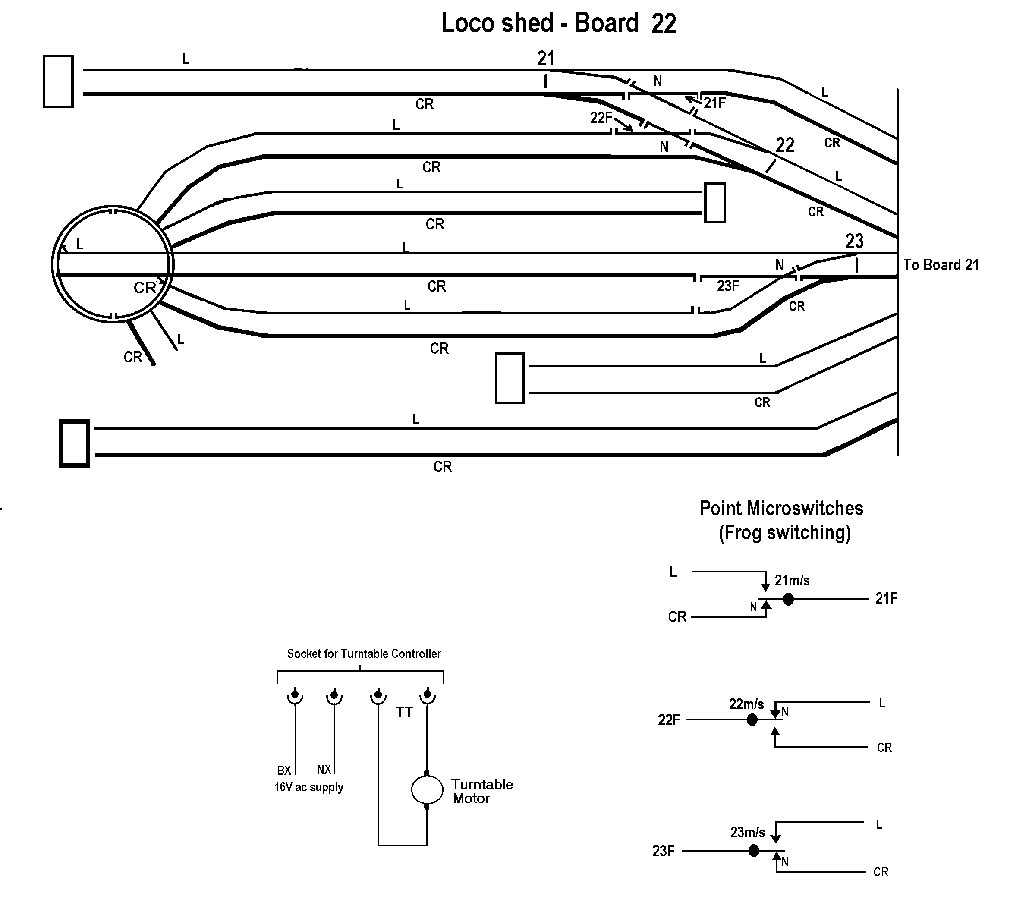
For me the elimination of the locomotive yard panel with its multiple section switches was a significant benefit of DCC control. With DCC all table approach tracks are live at all times and, prototypically, it is possible to drive into the pit when the table is aligned to another track - drivers must be careful. It would have been possible to provide a DCC decoder for the turntable motor and allocate it an address, however, as I had standard controllers no longer required for train control I decided the simplest solution was to drive the table from its own dedicated controller. The wiring is very simple as shown here.
Go to turntable mechanics Back to turntables Back to home page
Keith Norgrove, 14/11/98.
Copyright Keith Norgrove.
Last revised: August 27, 2003